
Sydney Wide
Subfloor Extraction Fan Systems
Help your home breathe from the ground up. Ducted extraction removes damp air beneath suspended floors to help reduce moisture and musty smells.
Under your home
Connected ducts. A clear path for damp air.
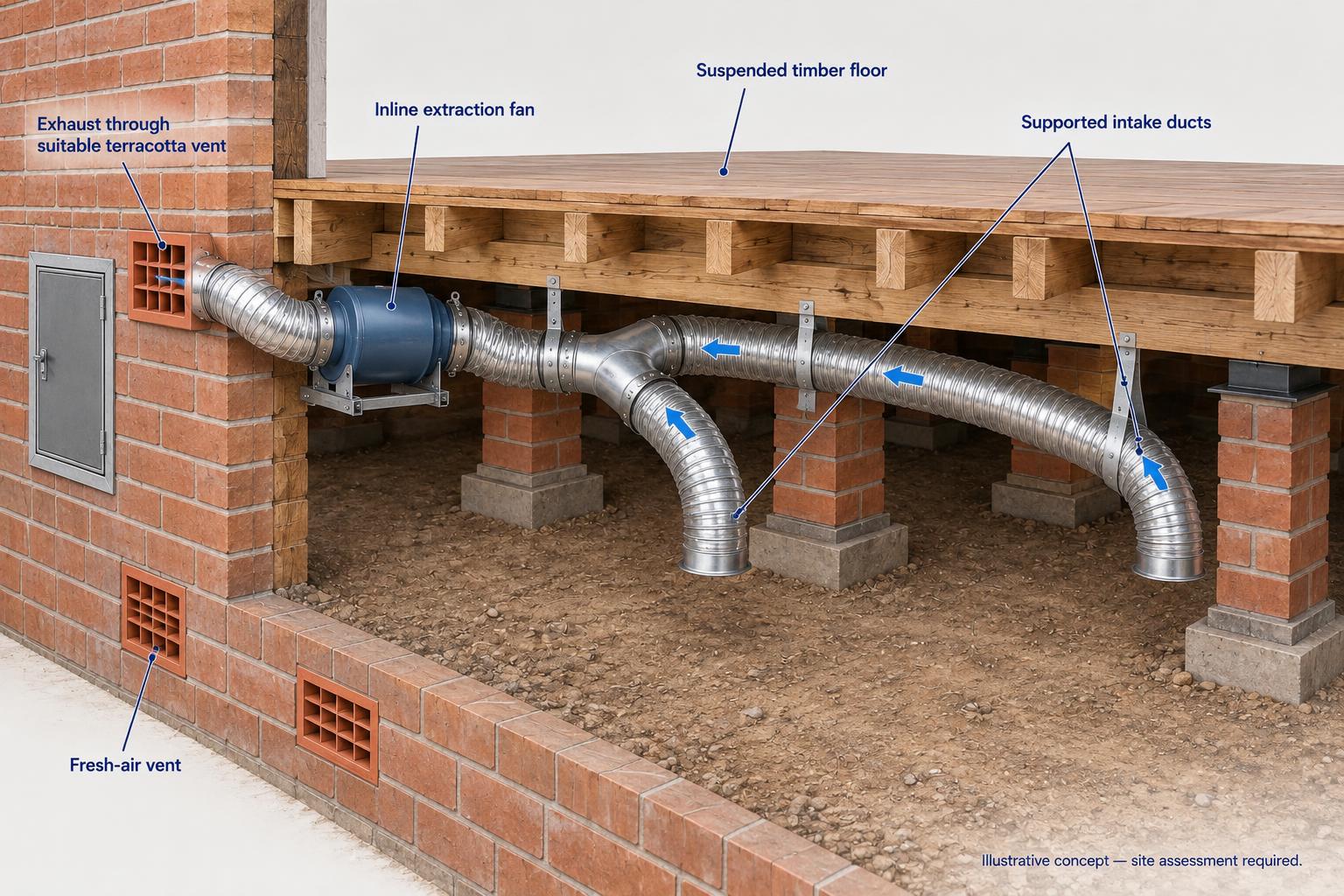
The illustration shows an Australian suspended timber floor, with joists and bearers supported on brick piers above an earth subfloor. A mounted inline extraction fan connects to a main duct and a Y-junction serving two pickup areas. Straps support the ducts beneath the framing, with downward-facing intakes held clear of the soil. Humid air travels through the ducts to the fan and is discharged outside. Other suitable terracotta subfloor vents provide replacement airflow; these ventilation openings are different from brick-veneer weep holes, which drain the wall cavity.
This example shows one exhaust arrangement: a short outlet duct connected to a suitable terracotta vent. This can be considered when the subfloor entry or exit is not a viable exhaust location. Suitability, outlet sealing and available replacement airflow are assessed on site.
Remove damp air
Extract moisture-laden air instead of leaving it trapped beneath the floor.
Reach stagnant areas
Junctions split the run so intakes can be placed around the layout and existing brick piers.
Support fresh airflow
Keep suitable air inlets open so extracted air can be replaced.
When to check your subfloor
- Persistent musty smells coming from beneath the house
- Damp soil or condensation in the subfloor
- Visible mould or moisture marks on floor timbers
- Blocked vents or areas with little natural airflow
A system suited to the site
We assess access, the moisture source, existing vents and the subfloor layout before recommending fan capacity, duct routes and suitable controls. That assessment also decides where the exhaust goes: the subfloor entry or exit where it is viable, otherwise a suitable terracotta vent.
Ventilation helps manage damp air; it is not a substitute for fixing leaks, drainage problems or rising damp. Existing mould and damaged timber may need separate professional attention. Electrical work requires a licensed electrician.
Subfloor ventilation questions
How does a subfloor extraction fan help with moisture?
The fan draws damp air up through ground-facing duct intakes suspended above the soil and exhausts it outside. Replacement air enters through suitable existing vents. With the right layout and operating conditions, this air exchange helps reduce humidity and supports drying over time.
Do the ducts connect to the terracotta vents or weep holes?
The intake ducts do not. Terracotta subfloor vents allow airflow beneath the house; brick-veneer weep holes drain the wall cavity. They are different openings and both must stay unobstructed. The intake ducts connect to the fan through a junction splitter and finish in the open subfloor, facing down but held clear of the ground, extracting humid air rather than liquid water. For the exhaust, the fan is normally positioned at the subfloor entry or exit and discharged outside through a grille. If that entry or exit point is not viable for the extraction, the fan exhaust may instead be attached to a suitable terracotta vent. The final arrangement is assessed on site.
Will a fan fix every damp subfloor?
No. Plumbing leaks, poor drainage, groundwater entry and rising damp may need separate repairs. Ventilation also does not remove existing mould or repair damaged timber. We assess the moisture source and access before recommending a system, and advise when another qualified trade is needed.
How much does a system cost?
Contact Jenkos for a site-specific quote. Cost depends on the subfloor area, access, required airflow, duct lengths, outlet positions and controls. Any electrical work must be carried out by a licensed electrician.
Concerned about moisture beneath your home?
Contact Jenkos for a site-specific quote. Blake will email or call you.